Tuesday, October 19, 2010

The Beats...and their Drugs


A group spurred on by their own inner motivation, the Beats paved the way for the American mindset we have today. Rebellious in nature, The Beats' influence reached so far that words such as "hip" and "cool" became part of our everyday vocabulary. They took everything with a grain of salt, and insisted on seeing the world for what it really is. Rejecting material goods, they go with the flow, and roll with the punches, making for a very dynamic, vibrant social group.


Many Beats wished to open their minds to the world and experience new sensations. For this reason, recreational drug use became inextricably linked to the Beat Generation. Poets such as Allen Ginsberg, Jack Kerouac, and William Burroughs regarded drug use as an important part of life, meant to allow you to exist in multiple mental states and stimulate you beyond your ima
gination. Now when speaking about drugs it's best to understand what the Beats considered to be drugs. William S. Burroughs explains best his stance on drug use in a commentary on his novel Naked Lunch (1959):
"When I speak of drug addiction I do not refer to keif, marijuana or any preparation of hashish, mescaline, Banisteriopsis caapi, LSD6, Sacred Mushrooms or any other drugs of the hallucinogen group... There is no evidence that the use of any hallucinogen results in physical dependence"
Burroughs, receiving a monthly allowance of $200 from his parents, was able to forgo employment and have complete freedom for twenty-five years of his life. During this time, he left Harvard University, traveled throughout Germany and Austria, aided a Jewish refugee in coming to the United States, enlisted in the United States Army and was discharged, eventually landing him in New York City selling heroin to support a morphine addiction. All in all, though, a pretty normal life. Burroughs had several turbulent periods in his life (did I mention he killed his wife?), and serious drugs seemed to be an everyday occurrence, although he managed to keep his life together until the ripe age of 83, dying of a heart attack in Kansas.
Allen Ginsberg, the Jewish leftist homosexual of the group, highly valued his drug experiences. In 1948, Ginsberg claims to have heard the English poet William Blake reciting poetry that he had written. Although it is unclear whether Ginsberg was actually "tripping balls" at this point, he does explain that his subsequent "drug experimentation in many ways was an attempt to recapture that feeling". It is, after this experience, that Ginsberg thinks there to be an "interconnectedness of all existence". Also, Ginsberg works to bring drug use into the mainstream. With passionate ideas regarding politics and personal freedoms, Ginsberg sought to legalize marijuana and promote more common use of LSD. In his poem, Put Down Your Cigarette Rag (Don't Smoke), he brings to light the dangers of smoking tobacco, and juxtaposes that with drug use.
"30 thousand die of coke or
Illegal speed each year
430 thousand cigarette deaths
That's the drug to fear"
Finally, we have Jack Kerouac, the one poet that could write of sex, drugs, and other worldly sins so matter-of-factly that critics would think it to be a mistake. Kerouac, in an interview, tells that "Poem 230 from Mexico City Blues was written purely on morphine" and that "every line in this poem was written within an hour of one another...high on a big dose of M". Kerouac uses the effects of drugs to place himself in a different mindset and write poetry. Unfortunately, the psychedelic drugs commonly used throughout the 50's and 60's were quickly demonized by the establishment, bringing about their government recall and classification as dangerous substances.

William S. Burroughs once said that "
Our national drug is alcohol. We tend to regard the use of any other drug with special horror". It is true that, unlike drugs, alcohol related accidents account for a significantly inflated number of deaths in the United States. While alcohol and tobacco are pinned as the cause of over 500,000 annual deaths, the number of marijuana related deaths remains stagnant at zero. Now, I may be nuts, but considering the statistics...what's wrong with weed?


FURTHER READING:


Monday, October 18, 2010

The Poetic Politician


Does poetry mix with politics or do they repel each other like oil and water?

Poetry can be the most influential form of language, infused with emotive power used in everyday speech to reinforce political discourse. Political ideas and platforms are communicated by way of the written word and public orations, just like poetry. Poetry is a tool that politicians use to sway public opinion on issues. Therefore in my opinion the most skillful politician is a masterful poet. Unfortunately many dictators gained their power through poetic persuasion. Just because a politician is a powerful poet does not mean they are a good politician.


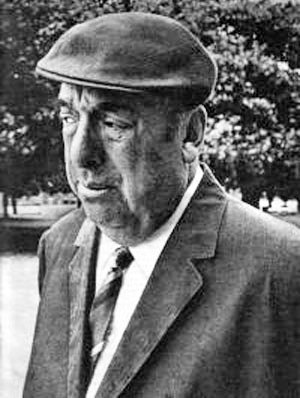
Two Examples of famous politicians, who were also poets, are Pablo Neruda, and Robert Byrd. Pablo Neruda is one of the most famous poets of the 20th century. In 1971, he was awarded the Nobel Prize for literature. While he was first and foremost a poet, Neruda also was a senator for the Chilean Communist Party for the few years it was in power. Robert Byrd is best known for his role as senator of West Virginia. In fact he was the longest serving senator in United States history. One of the reasons he was so loved was because he insisted on the occasional poetry recital in congress to lighten (or highten) the atmosphere. An opinion they shared is that all poetry is political in one way or another.

Robert Frost recited a poem at John F. Kennedy’s election. Frost had written a poem specially for the occasson called "Dedication" He began to recite it but given his advanced age and the glare of the sun on the sheet of paper prevented him to complete it. Instead he recited one entitled "The Gift Outright" from memory: After this recital all following inaugurations have had a poetry recital. This is a respected tradition, which now serves an important purpose in American history.

The only political position that poets can hold is the role of poet laureate. The most influential poets are chosen as laureates to acknowledge the importance of poetry in politics. While laureates are not required to write on political issues, they have the ability to criticize without being unpatriotic. As respected poets they often give the everyday public opinion more weight. This gives the poets undeniable political influence.
Even with overwhelming proof that poetry is a vital component to healthy politics there is a counter argument to my opinion. Many poets, Like Wyatt Prunty have denied poetry’s political influence, because, as he claims, “Political language must be simplified for the common audience. Poetry cannot be simplified to this degree. Poetry, it its fullest, transcends political factions, and expresses the universal human condition.” My retort is that government is created to serve the human condition. Therefore, politics depends on poetry to express what humans need from their government.

Sources:

http://www.npr.org/templates/story/story.php?storyId=1241067

http://www.georgiaencyclopedia.org/nge/Article.jsp?id=h-1257

http://en.wikipedia.org/wiki/Pablo_Neruda

http://en.wikipedia.org/wiki/Robert_Byrd

Dylan and The Dead


On a previous blog post I mentioned the Grateful Dead. This past week in class we spent a day talking about the works of Bob Dylan. Interestingly enough, Bob Dylan and the Grateful Dead collaborated in 1987 to make an album titled "Dylan and The Dead." "Dylan and The Dead" was recorded in 1987, during a successful stadium tour of the same title. For this series of concerts, the Grateful Dead would perform two sets of material, followed by a set by Bob Dylan, backed by the Grateful Dead. The collaborative group recorded seven songs for the album. They are: Slow Train, I Want You, Gotta Serve Somebody, Queen Jane Approximately, Joey, All Along the Watchtower, and Knockin on Heaven's Door. My favorite song of the collaboration effort, Knockin on Heaven's Door is a song written by Bob Dylan about a dying deputy. The song's lyrics below show poetic usage of repetition in the chorus, and the music that accompanies the song adds an eerie effect that dramatically slows down the song and makes it more solemn.

Mama, take this badge off of me
I can't use it anymore.
It's gettin' dark, too dark for me to see
I feel like I'm knockin' on heaven's door.

Knock, knock, knockin' on heaven's door

Mama, put my guns in the ground
I can't shoot them anymore.
That long black cloud is comin' down
I feel like I'm knockin' on heaven's door.

Knock, knock, knockin' on heaven's door


Here is a video of Dylan and The Dead performing the song Slow Train.


Sunday, October 17, 2010

Bob Dylan- Pioneer of a Generation

After discussing one of my all-time favorite musicians this past week in class, Bob Dylan, I decided to look into an area of study that I wrote a research paper on my sophmore year: Anti-war music during the Vietnam War. This topic is relevant to Bob Dylan because as many people know, he is one of the most influential artists of this generation of musicians.

Dylan was heavily influenced in his childhood by early rock stars Elvis Presley, Jerry Lee Lewis, and Little Richard. However, as he began his music career, he actually strayed away from traditional rock and towards the folk-like rock music. Unlike other folk singers of the time, such as Woody Guthrie and Joan Baez, Dylan opened his audience not just to the traditional folk music audience but to the college students. But how? Dylan's musical (and poetic) style is as if he is telling a story in his music, and when he would speak his message on stage, people would listen. His lyrics offered the public an awareness of what was going on with the world and not just to entertain the audience, which certainly appealed to youngsters nationwide.

As the Vietnam War began, Dylan broadened his focus from simply folk music to music that included Vietnam; he also tailored his songs to demonstrate the message he chose to follow, which was the anti-war movement. With his album The Times They Are A-Changin', Dylan established himself as the leading icon of the protest movement. It is pretty incredible to me how Dylan appealed to so many people, but when everyone is on the same page and all agree on the same cause, it is easy to see how an icon such as Dylan could emerge like this. For the very first time, the popular music in a generation was regarding a war, or in this case, disregarding it.

One of Dylan's best and most influential songs, Blowin in the Wind, shows his unique insight on the war, how the answer is right in front of us, but is still "blowin in the wind." Looking on this song on paper and listening to the song can really change one's view of the song, so below are the lyrics as well as a video of Dylan performing it:

How many roads must a man walk down
Before you call him a man ?
How many seas must a white dove sail
Before she sleeps in the sand ?
Yes, how many times must the cannon balls fly
Before they're forever banned ?
The answer my friend is blowin' in the wind
The answer is blowin' in the wind.

Yes, how many years can a mountain exist
Before it's washed to the sea ?
Yes, how many years can some people exist
Before they're allowed to be free ?
Yes, how many times can a man turn his head
Pretending he just doesn't see ?
The answer my friend is blowin' in the wind
The answer is blowin' in the wind.

Yes, how many times must a man look up
Before he can see the sky ?
Yes, how many ears must one man have
Before he can hear people cry ?
Yes, how many deaths will it take till he knows
That too many people have died ?
The answer my friend is blowin' in the wind
The answer is blowin' in the wind.


Sources:
http://library.thinkquest.org/11847/gather/3b.html
http://www.biography.com/articles/Bob-Dylan-9283052?part=0

Sunday, October 10, 2010

A Night Of Poetic Standards


My siblings, Alexandra, Andrew and I traveled to Brooklyn on Saturday the 2nd of October. We arrived for lunch at Roberta's, which is a restaurant based on a poetic concept.

----------------------------------------

Eat the Food,

Where the food is grown,

Where the food is prepared.

----------------------------------------

Here is the picture of Roberta's garden in the spring.


We ate and then just hung out among hoards of “Hep Cats” who crowded in and out of this chill spot. “You dig?”

It came time for us to “Fade Out” so we rolled out on “Badnews.”

Next stop was this tight scene where my sista was playing a live score for this Avant Garde “like” film screening thing called, “the secret fundraiser.” The concept of this fundraiser was as paradoxical as the city-garden at Roberta's. Somehow it works in Brooklyn.


We bounced from that scene to go to see a band called Liturgy.

They describe themselves as “Pure Transcendental Black Metal”

Actually the show was a poetry recital trampled by a charge of banging instruments.
---------------------------------


Ecstatic Rite

And the yoke weighed heavily
Upon the neck
And the tractors placed their tracks
Upon the cowering soil

The arrow cast
The bow pulled back
The arrow cast

And the chains were linked to other chains
Forged obliquely, freeing no one and everyone

Ecstatic rite
Divide the father

Ecstatic rite
Divide the father

From river to sea
The waves sing and shine
Untrained, unrestrained
Desiring nothing
From hill to vale

Form gives way to form
----------------------------------

This is one of the most beautiful poems but it cannot even be deciphered in the crowded music. I do not expect anyone to get though this whole video.


That one evening reminded me of the people of the "Beat Movement." Brooklyn is the new Greenwhich Village. It is an escape from "squaresville" for the youth.


Sources:

http://www.cityfarmer.info/wp-content/uploads/2010/08/robert3.jpg

http://www.robertaspizza.com/
http://www.youtube.com/watch?v=6lvIER0Mr0o
http://www.myspace.com/liturgynybm

Did Jew Know? I Sure Didn't

A liturgical work Yose ben Yose, 5th century
  Studying Allen Ginsberg this past week in poetry class made me start to wonder the roots of Jewish American Literature, more particularly Jews involved in poetry. Jews in literature date all the way back to the 5th Century with a man named Yose ben Yose, who, although little is known of his life, is the first poet of Jewish descent to begin writing original poetry (although Yose's work was primarily liturgical). As time went one, Jewish poets began to emerge. However, it wasn't until the 13th Century that Jews began to start taking poetry seriously as a profession. One of the leaders of this movement was Rabbi Abraham Abulafia who, throughout his life, was condemned for his unorthodox views and writings, and thus traveled around Europe encouraging others to express themselves freely.

   One event in American history that had a great deal of impact on Jewish Poetry was Immigration during the 1910s and 20s. Many Jews and other ethnicities were considered by many "unassaimible," and thus many Jews that came over in this time sought out to destroy this theory through their writing. 

  Although all this is well and good, the real start of the Jewish poet movement began post-World War II, when most Jews started to write about the horrors of war and their opinions and such. As I was researching Jewish poetry, I came across a very powerful poem written by a Polish Jew named Itzhak Katzenelson, who lived in  a Polish Ghetto throughout World War II until he was sent to Aushwitz where he eventually died. This poem is called "I Had Dream"


I had a dream,
a terrible dream:
my people was no more, my people 
disappeared.
I rose screaming:
Ah! Ah!
What I have dreamed
is happening now! 
Oh, God in heaven! -- 
Shuddering I shall cry:
what for and why
did my people die?
What for and why 
in vain did it die?
Not in a war,
not in battle . . .
the young, the old,
and women and babies so little -- --
are no more, no more:
wring your hands! 
Thus I'll cry in sorrow
both day and night:
What for, my Lord,
dear God, why?


Ginsberg Preaching his Message in Washington, 1966
  Thus leads us to the area of study that we have begun to tackle in our poetry class, the Beat Generation. The reason Jews became such an important group of people in this movement was because of people like Allen Ginsberg, who wasn't afraid to stick up for what he believed in and turn away from conformity. Thats why I find the connection of all Jewish Poets and Poetry so interesting. I'm sure from the time of Yose ben Yose, to the World War Two Era and Kalzenelson, all the way to Ginsberg, Jews were always discouraged, and thus had great inspiration for their writing. Below is a clip from the upcoming movie "Howl" starring James Franco as Allen Ginsberg. One can just tell from this clip how powerful Ginsberg's words were on a generation where few stood up to conformity. 


-Source: Jewish American Poetry

John Lennon Anniversary


This weekend marked the 70th birthday of John Lennon. Lennon, a member of the Beatles who was fatally shot in New York City on December 8, 1980. Lennon is remembered as one of the most influential singer-song writers of the 20th Century. Besides music, Lennon had art pieces, and was a peace activist. Arguably, one of Lennon's most famous songs "Imagine" has a verse that has made me think about the world we live in the verse is as follows:
Imagine there's no countries It isn't hard to do Nothing to kill or die for And no religion too Imagine all the people Living life in peace
This verse has made me ponder about the world we live in. Native Americans for example, lived in a world without proper nations or religions. They Native Americans lived for the earth and of the earth. Their religion was based on the fact that everyone comes from the earth and when they die they return to the earth. A world without nations and religions would be quite different then the world we live in, without religion there could arguably peace in the middle east, Ireland and England would not be fighting, and neither would India and Pakistan. As John Lennon would say, imagine.
Here is a video of Lennon performing his song "Imagine":